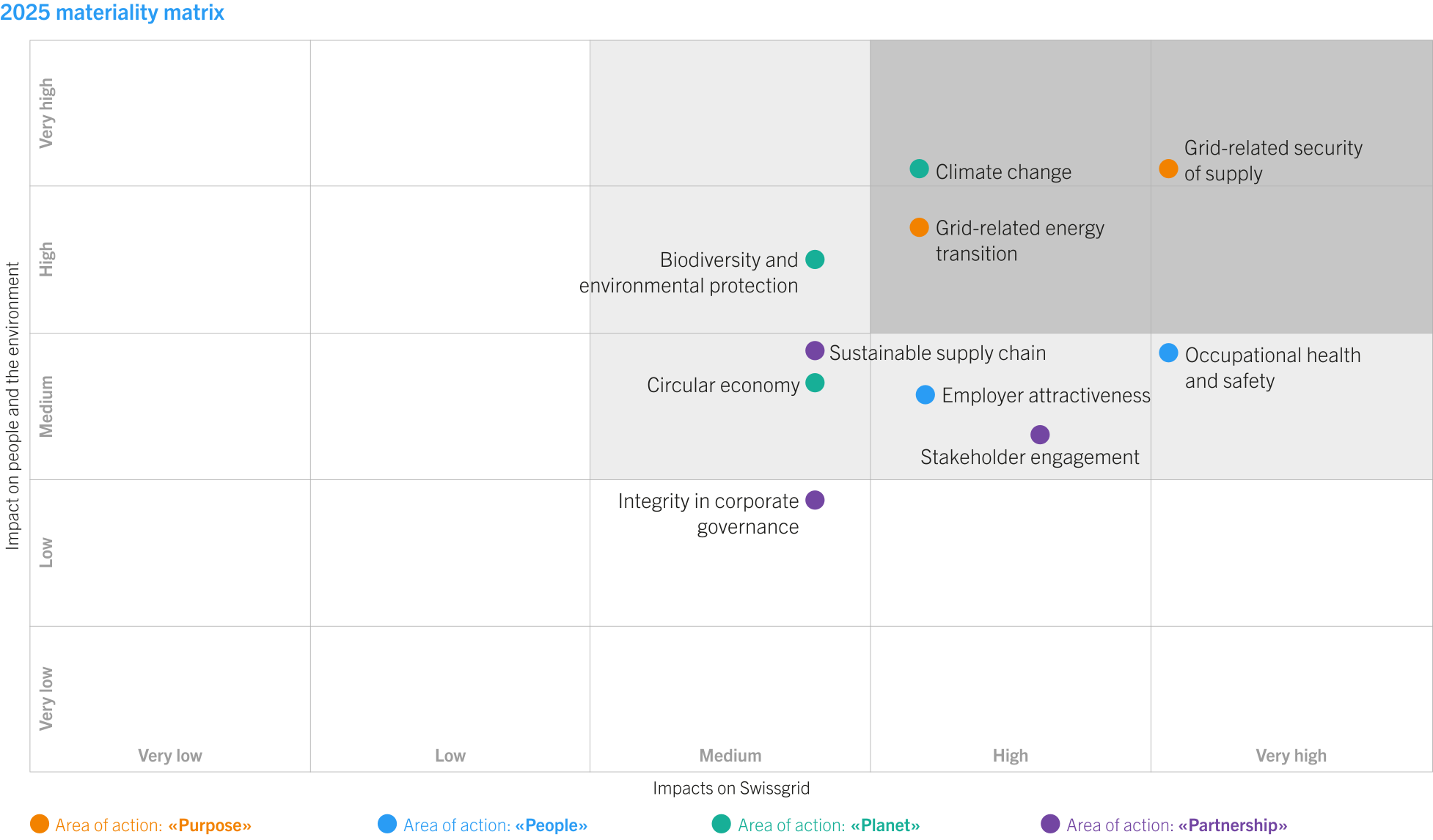
Double materiality analysis
Swissgrid’s ten priorities were identified using the double materiality analysis. The cross-divisional analysis was approved by the Board of Directors in January 2025 and reviewed in January 2026 to ensure that it was still up to date. When performing its materiality analysis, Swissgrid refers to the guidelines of the Global Reporting Initiative (GRI) and the general requirements of the European Sustainability Reporting Standards (ESRS 1). Swissgrid follows a structured, multi-stage process to identify and evaluate its priorities in relation to sustainability.
Identification and validation of sustainability topics: Swissgrid applies the following procedure to validate the list of relevant sustainability topics to be evaluated:
- Collection of possible sustainability topics: Swissgrid first compiles a comprehensive list of potential subject areas. This is based on the corporate strategy, the current materiality matrix, a benchmarking comparison with European and Swiss companies, relevant international and national standards (including GRI and ESRS) and the risk categories from Swissgrid’s Enterprise Risk Management (ERM). National and international trends and developments in the electricity and sustainability sector are also taken into account.
- Analysis of the corporate context: Swissgrid analyses its own value chain and corporate context in order to validate the collection of topics. It takes into account the company’s activities, business relationships and impact chains, as well as the concerns of relevant stakeholders.
- Internal and external consultations: Swissgrid holds regular consultations with internal and external stakeholders (industry, investors, NGOs, science and service providers) in order to identify and discuss relevant sustainability issues.
Evaluation of the identified sustainability topics according to the double materiality principle: Swissgrid assesses the impacts, risks and opportunities (IROs) of the identified sustainability topics according to the double materiality principle:
- External impacts («inside-out» perspective): Swissgrid evaluates the external negative and positive impacts of its activities on people and the environment along the value chain. Using topic-specific assessment scenarios, the potential and actual external impacts are assessed according to their extent, scope, irreversibility and probability of occurrence, taking into account a short, medium and long-term time horizon.
- Internal impacts («outside-in» perspective): at the same time, Swissgrid evaluates the actual and potential sustainability-related risks and opportunities for the company. This process is based on Swissgrid’s ERM and the methodology established in it in order to ensure a consistent risk assessment. Risks are assessed on the basis of the probability of occurrence and the potential extent of damage. The extent of damage is determined in relation to nine risk categories using quantitative and qualitative attributes: personal safety, security of supply, efficiency of the transmission system, financial situation, compliance, reputation, environmental and landscape protection, innovation and digitalisation and/or information security. Swissgrid adopts the highest-rated ERM risk or the highest-rated opportunity as a benchmark to evaluate the financial materiality of a topic.
Limit and classification of the main priorities: Swissgrid considers an issue to be material if either the impact on people and the environment or the opportunities and risks for Swissgrid are assessed as «medium» (on a five-point scale, this corresponds to a limit of 2.6 points). The resulting materiality matrix shows Swissgrid’s ten priorities and material topics. Sustainability topics that were not considered material (e.g. water, marine resources) are not listed in the materiality matrix.
The verification of the material topics at the end of the 2025 financial year did not result in any changes to the priorities compared to the previous year’s Sustainability Report. Minor adjustments were made on the basis of the updated ERM assessment, i.e. in relation to the risks for Swissgrid. These changes were approved by the Board of Directors as part of the annual risk report, but have no influence on the materiality assessment of the sustainability topics.